Vision
Enable valuable battery materials to re-enter productive value chains through safer, traceable and technically disciplined recovery.
Pune · Western India · Platform under development
Aadhya Ionix Private Limited is developing an industrial lithium-ion battery recycling platform designed to connect responsible feedstock management, mechanical resource recovery and the future regeneration of advanced battery materials.
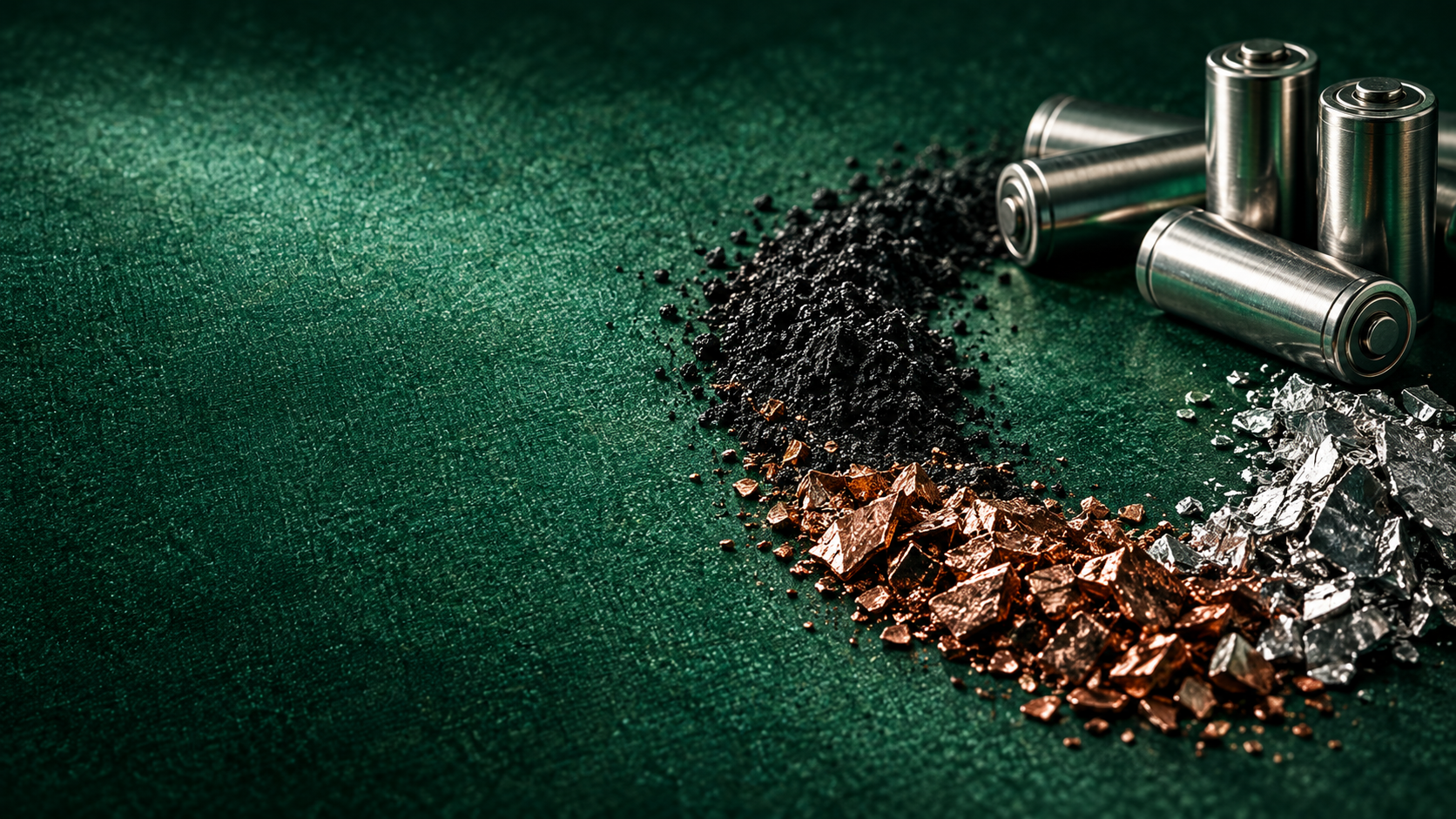
About Aadhya Ionix
Aadhya Ionix Private Limited is a Pune-based circular-materials company developing a stage-gated lithium-ion battery recycling platform. Our direction combines chemistry-aware feedstock management, safe mechanical resource recovery and a future pathway toward progressively validated advanced-material recovery.
The company is being developed around the practical requirements that determine industrial success: reliable feedstock, safe handling, chemistry segregation, process control, product quality, regulatory readiness and downstream buyer acceptance.
Our near-term focus is the planned Phase 1 mechanical platform. Phase 2 remains a research, patenting and scale-up pathway for lower-impact hydrometallurgical recovery and cathode regeneration after laboratory, pilot and demonstration validation.
Enable valuable battery materials to re-enter productive value chains through safer, traceable and technically disciplined recovery.
Develop a chemistry-aware industrial platform linking feedstock owners, responsible processing and qualified material users.
Scale only after evidence: validate safety, mass balance, product quality, buyer acceptance, economics and compliance at each gate.
Leadership
The directors jointly guide Aadhya Ionix’s commercial, financial, operational and process-development priorities.
Leads feedstock partnerships, downstream market development, strategic collaborations, financial planning and the company’s phased industrialisation strategy.
Leads mechanical operations planning, process development, feedstock specifications, quality-control systems, end-product market coordination and workforce management.

Strategic location
The Pune–Maharashtra industrial belt combines automotive and component manufacturing, electric-mobility activity, engineering talent, academic and research institutions, industrial logistics and access to Western India’s major markets.
What enters the platform
Battery form, history, state of charge, damage and chemistry influence safety, processing behaviour and recovered-material value. Acceptance is therefore intended to begin with documentation, inspection and controlled classification.
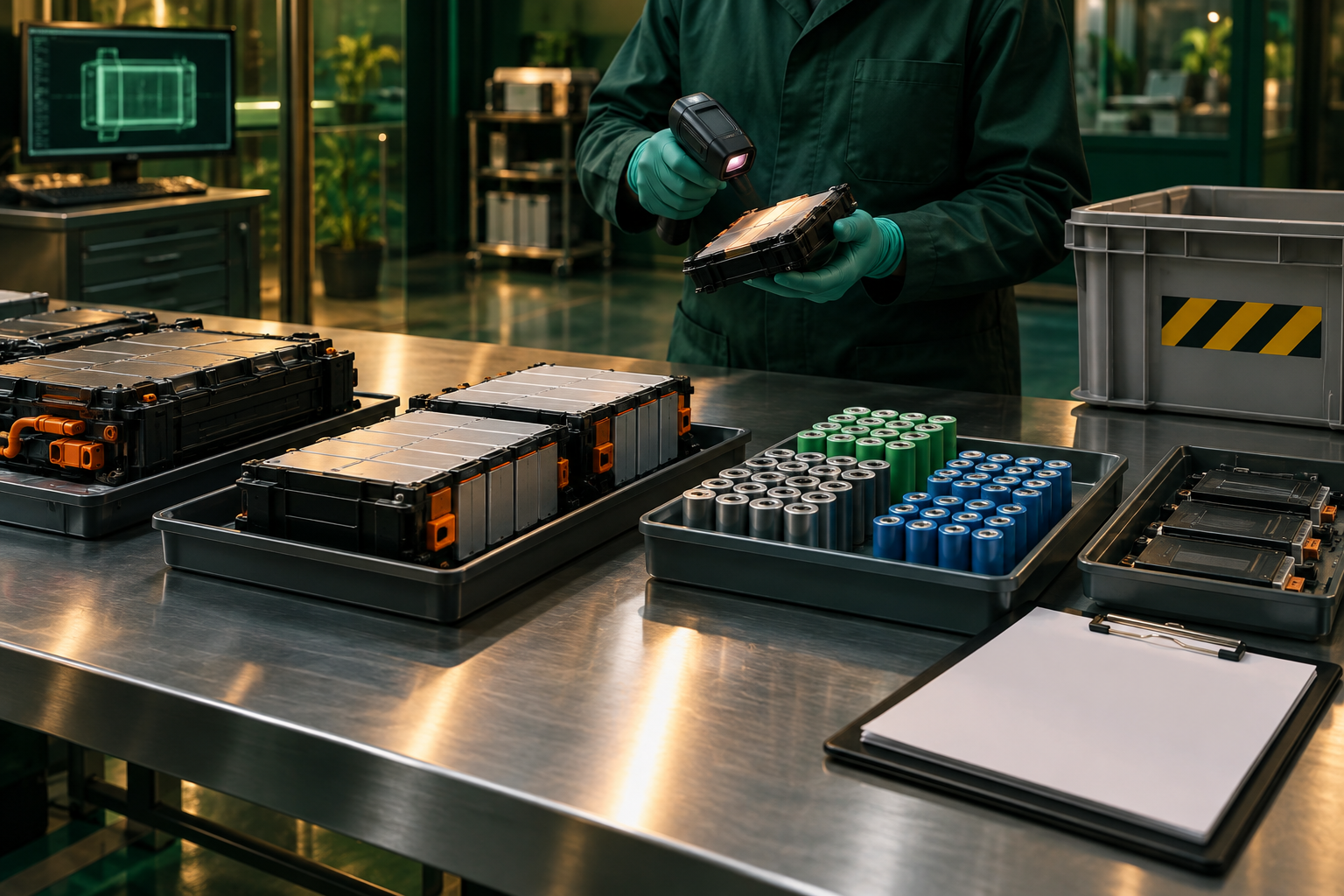
Cells, modules and production residues generated during battery or component manufacturing, subject to documentation and qualification.
Eligible two-wheeler, three-wheeler, passenger, commercial and fleet battery streams routed through appropriate channels.
Energy-storage, backup-power and industrial lithium-ion systems assessed for chemistry, condition and safe handling.
Eligible cells and packs from electronics and specialised applications, with controlled segregation and contamination checks.
Chemistry discipline
NMC, NCA, LCO, LFP and mixed or unidentified streams can carry materially different processing requirements and economics. The planned platform prioritises chemistry identification, compatible batching and buyer-specific quality controls.
Phase 1 · Planned industrial platform
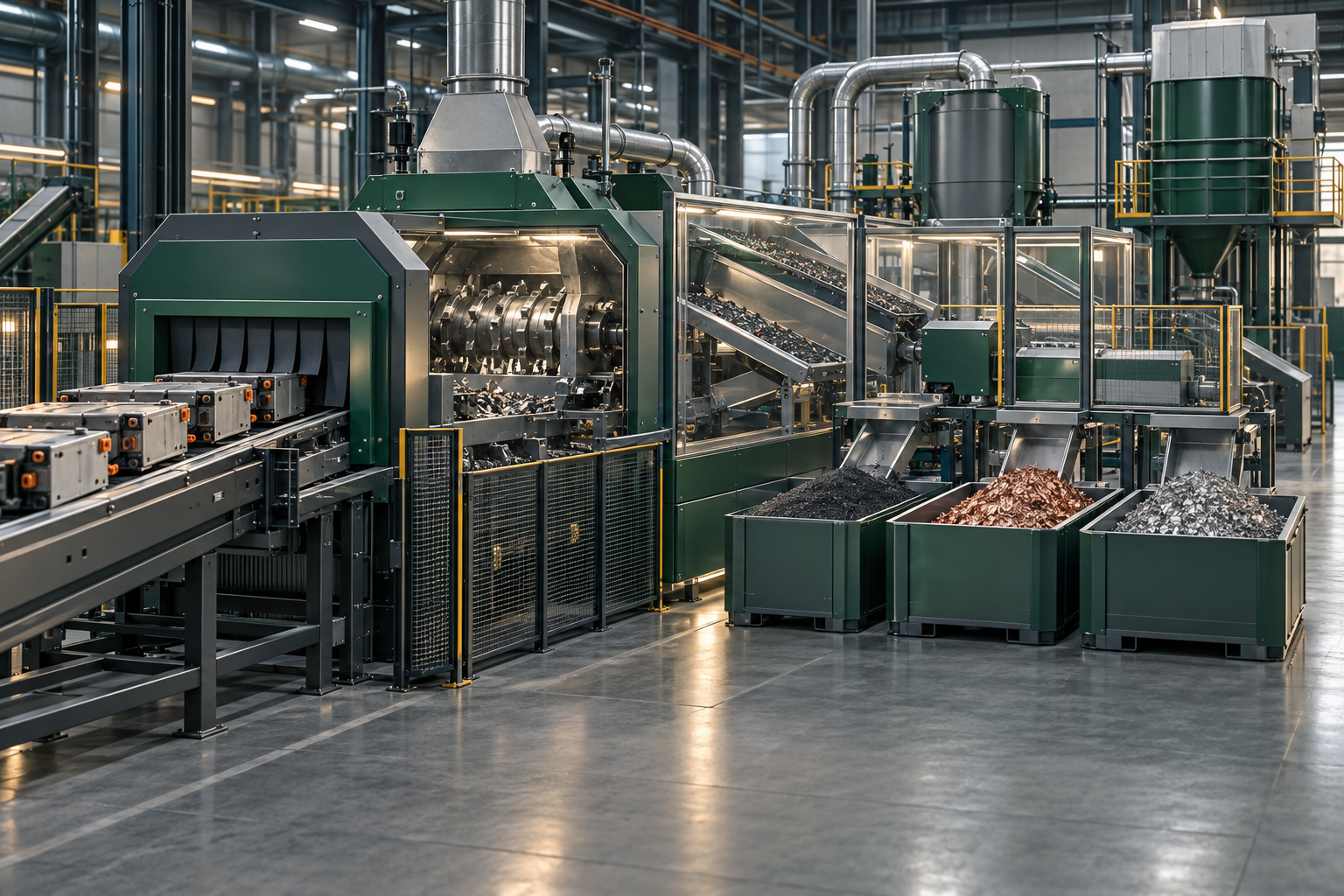
The proposed Phase 1 architecture uses a 1 tonne/hour nameplate planning basis. This is not current operating capacity and remains subject to trials, selected equipment, site, approvals, financing and final engineering.
Source records, transport documents, ownership, weight, pack details and available chemistry information.
Visual condition, damage, leakage, thermal indicators, form factor and provisional chemistry classification.
Controlled isolation, monitoring, discharge strategy and routing based on the condition of each incoming lot.
Removal of external structures, pack housings, cables, electronics and accessible metal components.
Controlled shredding or crushing within an engineered system designed around dust, fire and exposure risks.
Physical separation of fine active-material fractions from copper, aluminium, ferrous and polymer-rich streams.
Representative sampling, batch identification, contamination checks and alignment with agreed buyer specifications.
Suitable packaging, labelling, batch records, inventory controls and documented movement to qualified recipients.
Intended Phase 1 outputs
Commercial classification, recovery, purity and buyer acceptance will be determined through representative trials and agreed specifications. The outputs below describe intended categories, not guaranteed product performance.
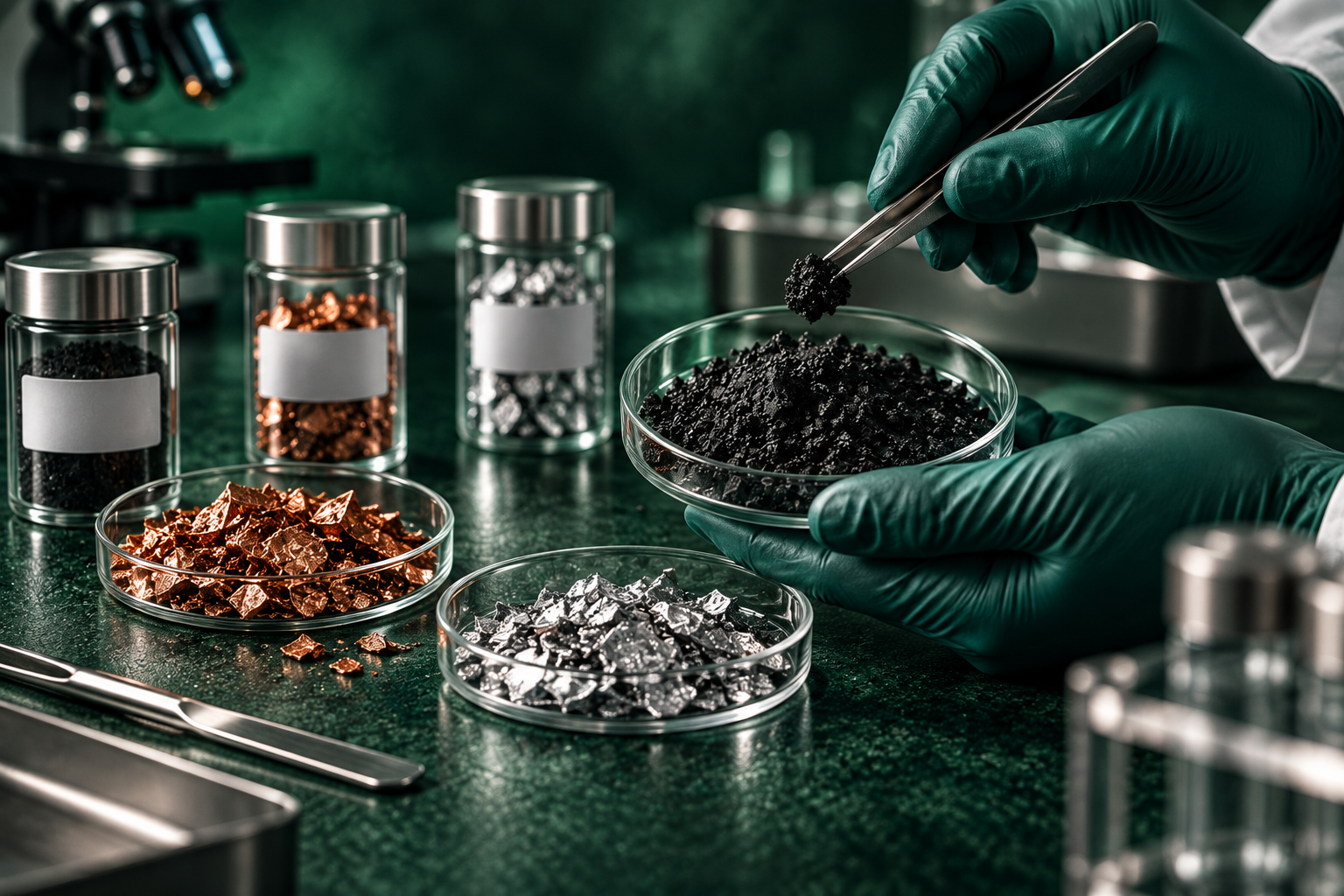
Visual appearance does not establish chemistry, purity or commercial grade. Planned release controls include representative sampling, analytical verification, batch identity and buyer-specific acceptance criteria.
Illustrative development image · not a photograph of Aadhya Ionix operationsA fine fraction expected to contain cathode and anode materials. Batch chemistry, moisture, impurities and downstream acceptance will require analytical verification.
Recovered conductor material requiring control of coatings, fines, moisture and cross-contamination.
Recovered aluminium-rich material from housings, structural parts and electrode-related fractions.
Steel and magnetic material separated for suitable downstream metal-recovery channels.
Separated plastics and non-metallic material requiring characterisation and an approved downstream route.
Phase 2 · Advanced materials roadmap
Phase 2 remains a research, patenting, validation and industrial scale-up pathway. It is not represented as licensed, commissioned, proven or commercially available.
Characterise chemistry, particle distribution, impurities, variability and representative mass balance.
Decision: is the feed reproducible enough for process development?Evaluate organic or mild-acid leaching, separation, impurity management, residue behaviour and cathode-regeneration routes.
Decision: can target materials meet defined technical criteria?Test repeatability, reagent and water strategy, process control, EHS requirements and product qualification across larger batches.
Decision: is the process safe, repeatable and commercially testable?Validate integrated equipment, continuous operation, utility demand, residue treatment, quality consistency and customer trials.
Decision: is there sufficient evidence for commercial engineering?Process recipes, unpublished experimental data, prospective intellectual property, detailed economics, supplier identities and customer-specific requirements are reserved for controlled technical or commercial discussions.
Where we create value
Responsible industrial development
Incoming inspection, segregation, quarantine, thermal-risk controls, trained handling and documented emergency response are intended to shape operations from the outset.
Applicable corporate, factory, environmental, waste, transport, fire, labour and local approvals must be mapped and secured before the relevant activity begins.
Weight records, source documentation, lot identity, process batch records, inventory reconciliation and dispatch documentation are planned as core controls.
Output names alone are insufficient. Sampling methods, analytical data, specification limits and buyer acceptance will determine commercial release.
Future process development will assess water, reagent, energy and residue strategies through measured trials rather than unverified environmental claims.
Public transparency about company direction is balanced with protected recipes, experimental data, economics, supplier terms and customer requirements.
Development status
Final engineering, site, equipment trials, approvals and financing
Verified counterparties, conditional volumes and acceptance criteria
Representative mass balance, assays and buyer specifications
Laboratory proof, pilot repeatability and demonstration evidence
Frequently asked questions
No. Aadhya Ionix is developing its proposed Phase 1 platform. Public descriptions of architecture, capacity or outputs are planning references and not statements of commissioned operations.
Phase 1 focuses on feedstock qualification, safe pre-processing, mechanical size reduction and separation into black mass and other material fractions. Phase 2 is a future development pathway for hydrometallurgical recovery, impurity removal and cathode-regeneration research after progressive validation.
The platform is being evaluated for NMC, NCA, LCO, LFP and controlled mixed lithium-ion streams. Each chemistry requires its own safety, processing, product-value and buyer-acceptance assessment.
Source type, form factor, chemistry, condition, location, historical and expected quantities, documentation, collection requirements, packaging, transport and commercial qualification.
As validation progresses, qualified buyers can discuss intended product categories, sampling and assay requirements, batch documentation, acceptance specifications, trial quantities and commercial qualification pathways.
Those numbers depend on feedstock chemistry, condition, process configuration, sampling and analytical method. Aadhya Ionix will not present target figures as achieved performance before representative trials and independent verification.
Contact Aadhya Ionix
Tell us whether you represent feedstock, material demand, technology, research, engineering, infrastructure or strategic capital. Relevant technical and commercial information can be shared through a structured qualification process.